Answer · · 4 min read
AI meeting notes for schools: board, staff, and IEP conversations
AI meeting notes for schools turn board meetings, staff sessions, and family conversations into a searchable record of what was decided, who owns the follow-up, and why. Teachers and administrators stop taking minutes by hand, and new staff get context on day one.
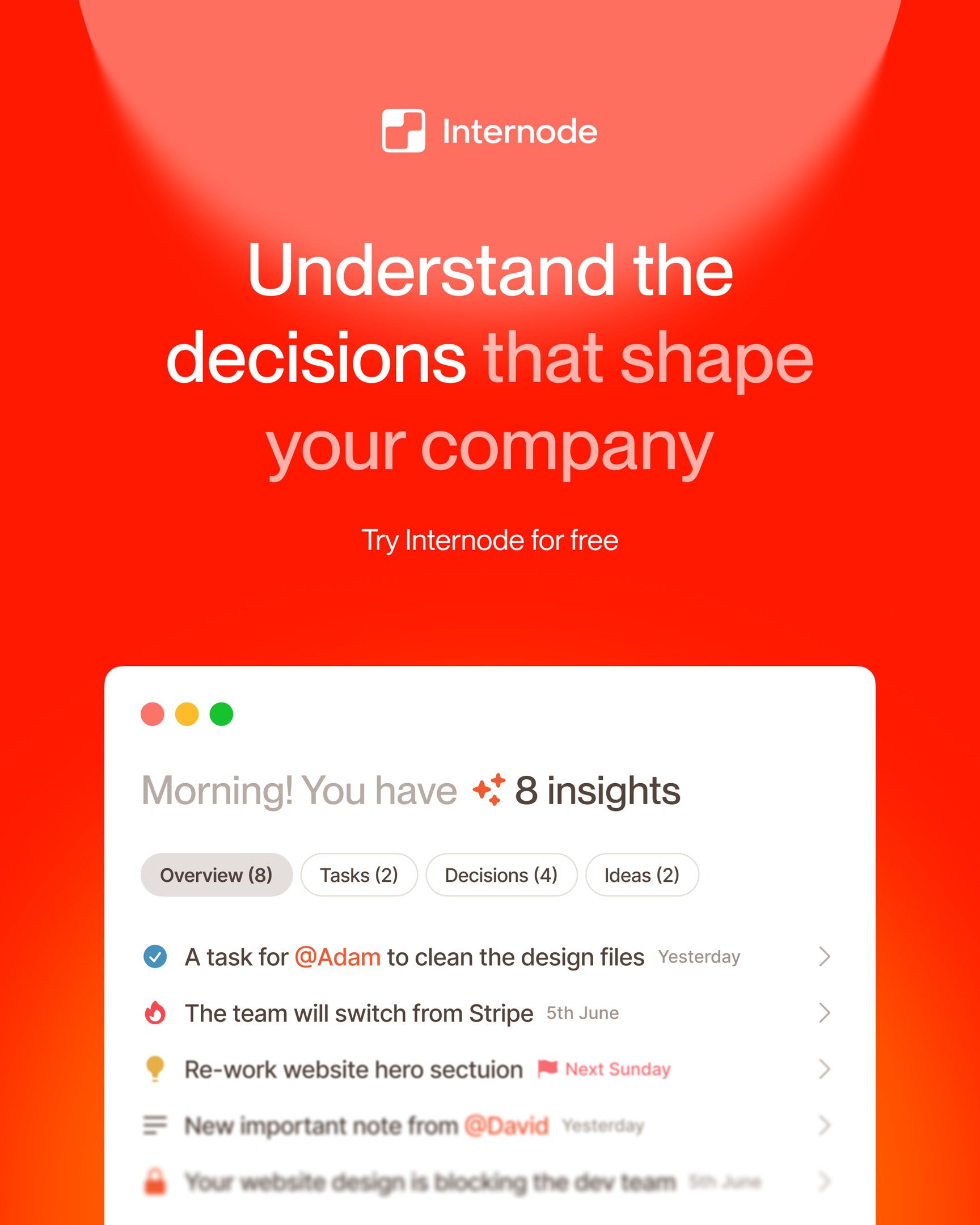
AI meeting notes for schools do three things that standard minutes do not. They capture what was decided, not only what was said. They link that decision to the program, policy, or student services it affects. And they keep the record searchable after the principal, coordinator, or board member who made the call moves on. The right tool pulls this from the meetings you already hold on Google Meet, Zoom, or a phone, without asking anyone to take minutes.
Why minutes alone keep failing your team
Our board meetings produce minutes. Our staff meetings produce a shared doc. IEP meetings produce paperwork that follows the student. None of these records answer the questions new staff actually ask.
Minutes record who spoke and what motion passed. They rarely capture why we chose one vendor over another, what the superintendent promised the community, or what compliance concern shaped a program change. Six months later, the principal who led that committee has transferred, and the only people who remember the reasoning are retirees we hesitate to call.
This is the drag new administrators feel during their first year. They inherit decisions they cannot interpret because the record says what happened but not why.
What AI meeting notes actually capture
A well-designed system does not produce a longer transcript. It reads the conversation and pulls out the parts that matter to our work. For each meeting, you get a short record of the decisions made, the reasoning behind them, who owns the next step, the deadline, and the program or policy each decision touches.
Internode, for example, extracts decisions and tasks from meeting transcripts and connects them to the topic the meeting was about: a specific program, a vendor contract, a policy revision, or a family communication plan. When a new coordinator searches “why did we change the math curriculum last April?” they get the decision, the rationale, the approvals, and the follow-up actions in one view. See how schools preserve institutional knowledge when staff leave for the pattern this builds on.
How capture works across your existing tools
Most schools do not want to change how they hold meetings. A good AI meeting notes tool works with what you already use.
Google Meet and Zoom recordings can be uploaded or connected, so the system reads the transcript and builds the record. Phone calls with a parent or agency can be recorded on a cell phone or desk phone and added the same way. Email threads that contain a confirmed decision can be forwarded in. Meeting notes typed in a Google Doc can be pasted or shared. Each source ends up in the same structured record, searchable by the topic you care about.
The staff burden is low by design. Nobody writes minutes in a new tool. The capture happens after the meeting, automatically, from inputs the team already produces.
What to know about FERPA, student privacy, and compliance
FERPA and student privacy should never be a footnote. An AI tool that handles IEP, 504, or disciplinary conversations needs to meet three honest requirements before it goes near student data.
First, the vendor must sign a data processing agreement and operate as a school official under FERPA’s school official exception, with a legitimate educational interest and direct control by the district. Second, recordings and transcripts that contain PII should be stored in a region you control, encrypted at rest, and excluded from any model training by default. Third, IEP and medical detail should be scoped so only the staff who need access can see it, with audit logs available for records requests.
No vendor can claim FERPA compliance unilaterally. What a vendor can do is sign the agreement, publish the controls, and let your counsel and IT team verify. If a tool will not do that on plain terms, it does not belong in a building with students.
Board meetings, staff meetings, and IEP conversations
The same capture pattern fits three different meeting types with different privacy postures.
Board and committee meetings are public record in most states. Capture there focuses on decisions, rationale, and the policy or budget line each decision affects. That record is what a new board member or a new principal can actually use to come up to speed. A related pattern for public agencies is in ai knowledge management for government.
Staff and leadership team meetings are internal. Capture focuses on program commitments, staffing decisions, and follow-up owners. This is the record that prevents your team from relitigating the same question every quarter.
IEP and family-facing conversations are the most sensitive. Capture here should be opt-in per meeting, scoped to the student’s case team, and integrated with your existing case management where possible. The value is not transcription. It is a searchable record of what the family was told, what services were agreed to, and what the next review date is.
Where Internode fits
Internode turns school meetings into a dated record of decisions, owners, and reasoning, linked back to the source conversation. It works from Google Meet, Zoom, phone recordings, and email, so your staff keep meeting the way they already meet. It answers plain questions like “what did we decide about the new reading curriculum last spring?” with the decision, the rationale, the owner, and the related program.
The test is simple. After a full board cycle, a new principal should be able to sit down, ask the system questions a retiree would have answered, and get the same reasoning in seconds. That is the difference between institutional memory that lives in one person and institutional memory that survives turnover.
Related pages
- How schools preserve institutional knowledge when staff leave
Schools preserve institutional knowledge by capturing the reasoning behind decisions, not just the minutes, and storing it in a searchable record that new staff can use when they need context about past choices, policies, and programs.
- What is organizational memory?
Organizational memory is the layer of your team's knowledge that survives turnover, vacations, and forgetting. It is the structured record of decisions, tasks, topics, intents, and the conversations that produced them. Without it, every new hire, every new project, and every new AI agent starts from zero.
- AI knowledge management for government: memory that survives turnover
AI knowledge management for government is a structured record of what was decided, what was rejected, and why, built from the meetings and committee sessions your agency already holds. The test is whether a new program manager, appointee, or elected official can reconstruct the reasoning behind a multi-year program without calling a retiree.
Next step
If this topic is relevant to your team, continue on the main site or explore the product directly.